The trend of sound marks against deepfakes: less protection than meets the eye
On 5 October 2026, Italian Prime Minister Giorgia Meloni filed an application for a European Union sound mark consisting of a recording in which she utters the phrase “Io sono Giorgia Meloni”, for certain goods in Class 9 of the Nice Classification (including downloadable multimedia content, electronic publications and multimedia recordings), as well as for services in Classes 41 and 45 (including cultural activities, conducting conferences and organizing political events).
I. The trend
The Prime Minister’s move is part of a recent trend that has seen, among others, singers Taylor Swift and Giusy Ferreri and voice actor Luca Ward file sound mark applications for recordings of their own voices: a trend that appears to be aimed, among other things, at countering the unauthorized exploitation of public figures’ voices to create deepfakes and other digital content.
This phenomenon, however, raises an interesting question: is a trademark really an effective tool against the unauthorized exploitation and reproduction of a person’s voice? In my view – and without even considering any potential revocation of the mark for non-use – the answer is: “only to a limited extent”.
The reason lies not so much in the distinctiveness of the recording in relation to the goods and services claimed — which, in the specific case of the Prime Minister’s application, may well be present — as in what a sound mark actually protects and, above all, in how similarity between sound marks is assessed.
To illustrate the point, I will take the EU trademark application “Io sono Giorgia Meloni” as a reference.
II. Does the trademark protect the sign or the voice?
First of all, it should be borne in mind that the voice is not the registered sign and that a trademark does not protect a person’s voice as such: a distinction that becomes crucial when it comes to voice “cloning”.
What Meloni has applied to register is a specific sound sign, namely her voice uttering a specific sequence of words: “Io sono Giorgia Meloni”. It is this four-word sequence, uttered in this way, that constitutes the subject matter of the application and, therefore, of the protection sought.
III. A practical example and the assessment of likelihood of confusion between signs
Now suppose that an AI-generated recording perfectly reproduces the Prime Minister’s voice but, instead of having her say “Io sono Giorgia Meloni” – that is, reproducing the sign covered by the trademark application – has her say “Buongiorno a tutti”, and that this recording is included in a downloadable meme.
Article 9(2)(b) of Regulation (EU) 2017/1001 entitles the proprietor of an EU trademark to prevent the use in the course of trade of a sign that is identical with, or similar to, the trademark in relation to identical or similar goods or services where, because of such identity or similarity, there exists a likelihood of confusion on the part of the public. As is well known, for sound marks too, the likelihood of confusion must be assessed globally, taking into account, among other factors, the degree of similarity between the signs and between the goods or services, the distinctive character of the earlier mark and the perception of the relevant public. In the case of sound marks, the relevant comparison is primarily phonetic, to which a conceptual assessment may be added where the sign contains verbal elements with a meaning.
So, if the earlier sign is the sound “Io sono Giorgia Meloni” and the contested meme reproduced the Prime Minister’s voice saying “Buongiorno a tutti”, it would be difficult, to say the least, to argue that the two signs are, for that reason alone, similar for trademark purposes. The voice may sound identical, but the content of what it says – and therefore of what the public hears – does not: the signs would, in all likelihood, be found not to be confusingly similar. Same voice, different signs.
IV. The EUIPO guidelines on sound marks
The point is particularly relevant because the EUIPO Guidelines themselves make clear that the mere coincidence of elements such as voice and intonation normally has a limited impact on the phonetic comparison of signs. In this regard, the Guidelines offer a telling example: two sound marks consisting of the words “GERIVAN” and “BANANA”, pronounced with the same voice and the same intonation, are not considered phonetically similar, precisely because their verbal content differs. They then give the opposite example: the same word “GERIVAN” pronounced with different voices and intonations; here, the coincidence of the verbal element may lead to a finding of similarity despite the differences in voice.
Returning to our example, when comparing “Io sono Giorgia Meloni” with “Buongiorno a tutti”, the strongest common element might be precisely the one that carries relatively little weight in a traditional comparison of marks: the identity of the voice. The content, rhythm, sequence of sounds and overall acoustic impression would, by contrast, be substantially different.
In other words, what makes a deepfake convincing does not necessarily coincide with what makes two signs similar for trademark purposes.
In light of the above, to protect oneself against deepfakes and unauthorized uses of one’s voice, it appears more effective to rely on legal instruments other than trademarks.
V. Other legal tools for protecting the voice – Personality right
First, Italian law protects personality rights irrespective of any registration and of any link between sign, goods and services: Articles 96 and 97 of the Italian Copyright Law govern the use of a person’s portrait, while Article 10 of the Italian Civil Code protects a person’s image against unlawful display or publication. The voice is not expressly mentioned in these provisions, but it may be relevant as an identifying feature of the person within the broader protection of personality rights and personal identity, in light of now well-established case law extending protection to individual distinctive traits of a person, in an approach close to the “right of publicity” under Common Law.
In particular, where a voice is immediately recognizable and makes it possible to identify a specific person, its unauthorized use may infringe that person’s right to their image. Here, it is indeed the voice as an identifying feature of the person that is protected, and not the specific content of what is said. The difference from trademarks is clear: if the Prime Minister’s voice were exploited to create a meme in which she says “Buongiorno a tutti”, the protection of her image would not depend on whether that phrase is identical with or similar to “Io sono Giorgia Meloni”.
VI. Other legal tools for protecting the voice – Unlawful processing of personal data
The unauthorized use of another person’s voice may amount to unlawful processing of a special category of personal data, namely “biometric data”, which, under Article 4(14) GDPR, relate to “the physical, physiological or behavioural characteristics of a natural person, which allow or confirm the unique identification of that natural person”.
This approach is also confirmed by the Guidelines on Biometric Recognition and Graphometric Signatures issued by the Italian Data Protection Authority, according to which processing a person’s voice in a way that easily allows that person to be identified would be prohibited, save in the cases provided for in Article 9 GDPR. Here, too, what matters is the processing of the voice as data relating to the data subject, not what that voice says.
VII. Other legal tools for protecting the voice – Criminal law protection
Moreover, if the unauthorized content makes the person say, or attributes to them, statements that are false, never actually made or damaging to their reputation, the offence of defamation under Article 595 of the Italian Criminal Code may also come into play.
More specifically, Article 612-quater of the Italian Criminal Code, introduced by Law No. 132/2025, punishes anyone who causes unjust harm to a person by disseminating, without their consent, images, videos or voices that have been falsified or altered by means of artificial intelligence systems and are capable of misleading as to their genuineness. The provision is particularly significant because it expressly protects falsified or altered voices, without any need to establish whether they reproduce a sign registered as a trademark or whether the content uttered is similar to that covered by the registration.
VIII. The relevance of the AI Act
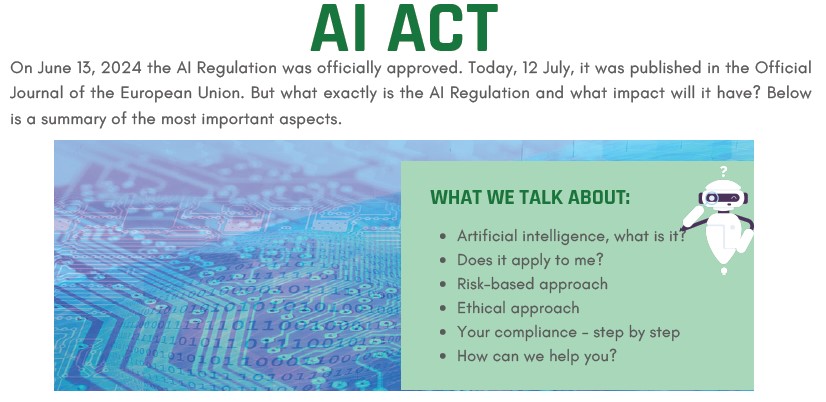
Finally – although it does not confer any exclusive right on the person to whom the voice belongs – Article 50 of Regulation (EU) 2024/1689 (the so-called “AI Act”) deserves a mention, as it imposes specific transparency obligations for artificially generated or manipulated content. Providers of AI systems must ensure that such content is detectable as artificially generated or manipulated, while deployers of AI systems that generate or manipulate audio, image or video content constituting a deepfake must disclose that the content has been artificially generated or manipulated.
IX. Conclusions
In conclusion, a sound mark can certainly be a useful protective tool – for example, against the reproduction of the specific recording filed or of similar signs for related goods and services – but it appears ill-suited to act as the main response to voice deepfakes, compared with the other legal tools mentioned above, which offer more direct and effective protection.